- H. NO. 275, Krishna Nagar, Bhim Nagar, Vijay Nagar, Ghaziabad, Uttar Pradesh 201009
- +91 9871980226
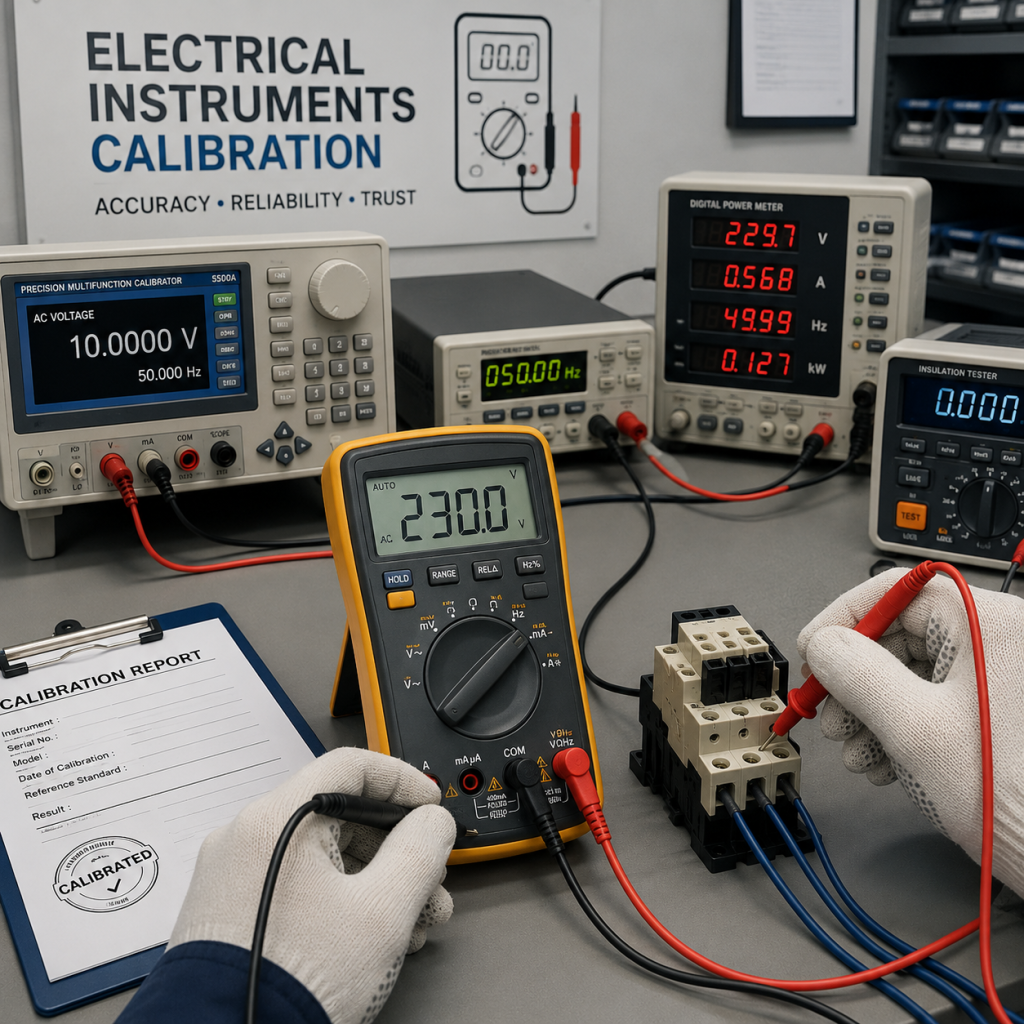
Electrical Instruments Calibration
- Home
- Electrical Instruments
Calibration Services
Get Started Today
- +91 98719 80226
- sales@kohavcalibrationservices.com
- H. NO. 275, Krishna Nagar, Bhim Nagar, Vijay Nagar, Ghaziabad, Uttar Pradesh 201009
Contact with us for any advice
Need help? Talk to an expert
+91 98719 80226
Reliable Electrical Instruments Calibration Services
Accurate electrical measurements are essential for maintaining quality, safety, and consistent performance in industrial, manufacturing, engineering, laboratory, and electrical applications. Kohav Calibration Services Private Limited provides professional Electrical Instruments Calibration Services to help organizations maintain the accuracy and reliability of their electrical and electronic measuring instruments.
Our calibration approach focuses on evaluating instrument performance against appropriate reference standards and identifying measurement deviations. We help businesses maintain confidence in their electrical measurements and support reliable quality control processes.
Professional Calibration for Electrical Measuring Instruments
Electrical measuring instruments are used to measure parameters such as voltage, current, resistance, frequency, insulation, and other electrical characteristics. Over time, instrument performance can change because of regular usage, environmental conditions, aging, or other factors.
Regular electrical instrument calibration helps identify potential measurement errors and provides greater confidence in the readings obtained from these instruments.
At Kohav Calibration Services, we support a wide range of electrical and electronic measurement instruments based on their type, range, resolution, application, and applicable calibration requirements.
Electrical Instruments We Calibrate
Our electrical instruments calibration services can cover various types of measuring and testing equipment, including:
- Digital Multimeters
- Analog Multimeters
- Clamp Meters
- Insulation Resistance Testers
- Electrical Testers
- AC/DC Voltmeters
- AC/DC Ammeters
- Resistance Meters
- Frequency Meters
- Power Meters
- Multifunction Electrical Testers
- Electrical Measuring Devices
- Other Applicable Electrical Instruments
The calibration procedure may vary depending on the instrument type, measurement range, accuracy requirements, and intended application.
Why Electrical Instrument Calibration Is Important
Reliable electrical measurements are important for quality control, testing, maintenance, production, and engineering operations. An inaccurate instrument can produce incorrect readings that may affect inspection results and operational decisions.
Regular electrical instruments calibration can help organizations:
- Maintain measurement accuracy
- Identify measurement deviations
- Improve reliability of electrical measurements
- Reduce measurement-related errors
- Support quality control activities
- Maintain proper calibration records
- Improve confidence in test and measurement results
- Support applicable quality requirements
Our Electrical Calibration Process
Instrument Identification
The instrument is received and its available details, identification, range, and other relevant information are recorded.
Visual & Functional Inspection
The instrument is checked for its general physical condition and functional operation before calibration.
Calibration & Measurement
The instrument is evaluated using suitable reference standards and calibration procedures relevant to its measurement parameters.
Result Evaluation
The observed readings are reviewed to determine the measurement performance and identify any applicable deviation.
Calibration Documentation
Relevant calibration results and instrument details are documented according to the applicable service and customer requirements.
Instrument Delivery
Once the calibration process is completed, the instrument is prepared for safe return to the customer.
Benefits of Electrical Instruments Calibration
Properly calibrated electrical measuring instruments help businesses maintain greater confidence in their measurement and testing activities. Regular calibration can also support consistent quality control and help identify instruments that may require adjustment, repair, or further evaluation.
Calibration is particularly important for organizations where electrical measurements are used for product testing, inspection, maintenance, process control, laboratory work, or safety-related activities.
Why Choose Kohav Calibration Services?
Accuracy-Focused Calibration
We focus on dependable measurement evaluation and accurate calibration results for applicable electrical instruments.
Professional Service
Our calibration activities are carried out through a systematic and professional approach based on instrument requirements.
Wide Range of Instruments
We support calibration requirements for various electrical and electronic measuring and testing instruments.
Reliable Documentation
Relevant calibration information and results are documented to help customers maintain their instrument records.
Customer-Oriented Approach
We understand the importance of accurate electrical measurements and work to provide calibration solutions according to customer requirements.
What is electrical instrument calibration?
Electrical instrument calibration is the process of evaluating the measurement performance of an electrical measuring instrument against an appropriate reference standard to identify measurement deviations.
Which electrical instruments can be calibrated?
Depending on the applicable calibration capability and requirements, instruments such as digital multimeters, clamp meters, insulation testers, voltmeters, ammeters, resistance meters, frequency meters, power meters, and other electrical measuring devices can be considered.
Why is electrical calibration important?
Electrical calibration helps provide confidence in measurement accuracy and can reduce the risk of decisions being based on inaccurate electrical readings.
How frequently should electrical instruments be calibrated?
Calibration intervals depend on factors such as instrument type, usage frequency, operating environment, manufacturer’s recommendations, previous calibration history, and organizational quality requirements.
Can electrical instruments be calibrated for different measurement ranges?
Yes, calibration requirements can vary according to the instrument’s measurement parameters, range, resolution, and intended application. The applicable calibration points should be determined based on the instrument and customer requirements.